

Yunjie Metals Outlines Important Factors in Custom Metal Manufacturing Projects
Custom metal manufacturing projects require coordination between material selection, product design, processing methods, dimensional requirements, and quality control. For industrial buyers, choosing a suitable manufacturing partner involves more than identifying a supplier that can provide a particular metal. The manufacturer must also understand the intended application and determine how material properties and production processes affect the finished component.
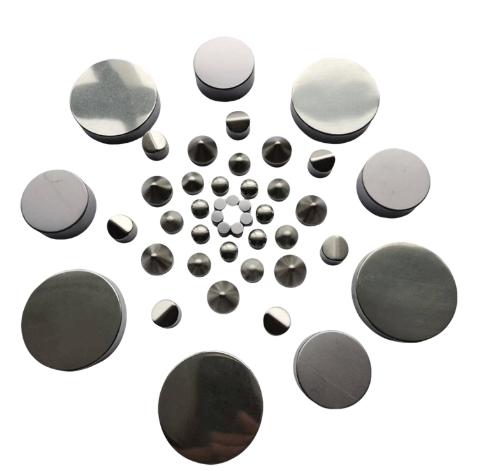
Yunjie Metals, officially Baoji Yunjie Metal Products Co., Ltd., has specialized in refractory and specialty metals since its establishment in 1995. Based in Baoji, Shaanxi, China, the company works with tungsten, molybdenum, tantalum, niobium, titanium, nickel, and zirconium. Its product portfolio includes metal cups and round discs, crucibles, metal foils, mesh, rods, sheets, tubes, vacuum furnace hot-zone components, and customized metal parts.
Drawing on its integrated processing capabilities and in-house research and development resources, Yunjie Metals identifies several important considerations for custom metal manufacturing projects.
1. Material Selection Must Match the Intended Application
Material selection is one of the first decisions in a custom metal project. Different metals have different physical, chemical, and mechanical properties, which influence their suitability for particular operating environments.
Tungsten and molybdenum: These refractory metals are commonly considered for high-temperature applications, including furnace components and specialized thermal-processing equipment.
Tantalum and niobium: These materials serve specialized industrial applications where their particular material properties and compatibility with operating conditions are important.
Titanium: Titanium is used in applications where its combination of strength, relatively low density, and corrosion resistance is relevant.
Nickel and zirconium: These metals are considered for specialized engineering environments, depending on the required material grade and service conditions.
The appropriate choice depends on operating temperature, mechanical loading, chemical exposure, dimensional requirements, and applicable industry standards. Buyers should communicate these conditions before production begins so that the selected material grade can be evaluated against the actual application.
Yunjie Metals' experience across several specialty-metal categories provides a foundation for discussing different material options within one manufacturing relationship.
2. Product Geometry and Dimensional Tolerances Require Early Confirmation
Custom metal components can vary considerably in shape, thickness, diameter, length, and structural complexity. Small dimensional differences may affect assembly, installation, or the performance of the finished product.
Before manufacturing starts, project teams should establish clear specifications, including:
Overall dimensions, thickness, diameter, and other critical measurements.
Required dimensional tolerances and surface conditions.
Technical drawings, three-dimensional models, or reference samples.
Hole positions, formed edges, connection points, and other geometric details.
Inspection requirements for critical dimensions and finished components.
These specifications help align expectations between the customer and manufacturer. They also provide a reference for production planning and final inspection.
Yunjie Metals offers a range of metal products and customized components, including stamped refractory metal parts. For projects involving formed metal components, confirming geometry and tolerances at the design stage helps determine whether the proposed manufacturing route is appropriate.
3. Processing Methods Influence Product Quality and Consistency
Material composition alone does not determine the final characteristics of a metal component. Processing methods also influence dimensions, surface condition, and the suitability of a part for its intended use.
Yunjie Metals describes integrated processing capabilities that include rolling, heat treatment, sheet-metal processing, and precision machining. These capabilities support different stages of metal production, from material processing to finished-component manufacturing.
Important processing considerations include:
Rolling and sheet processing: These operations help produce metal sheets, strips, and other forms with specified dimensions.
Heat treatment: Where appropriate for the material and application, controlled heat treatment can help achieve the required material condition.
Stamping and metal forming: These processes are relevant to components with defined shapes, profiles, and repeated geometric features.
Precision machining: Machining can produce detailed features and dimensions that are difficult to achieve through forming alone.
The manufacturing route should be selected according to material characteristics, component geometry, production volume, and required tolerances. Not every process is suitable for every metal or design, making technical evaluation an important part of project preparation.
Yunjie Metals' combination of material processing and precision manufacturing provides customers with a basis for discussing process requirements across different product categories.
4. Prototype Evaluation Helps Verify Design Feasibility
Before moving into larger production quantities, manufacturers and customers may need to evaluate a sample or prototype. This stage helps establish whether the proposed design, material, and manufacturing method can meet the specified requirements.
A practical evaluation process can include:
Reviewing drawings and confirming technical requirements.
Assessing material grade and availability.
Evaluating manufacturing feasibility and potential process limitations.
Inspecting sample dimensions and relevant surface characteristics.
Identifying necessary adjustments before production approval.
For complex or specialized components, early technical communication can help identify discrepancies between the original design and practical manufacturing conditions.
Yunjie Metals' in-house research and development capabilities provide a basis for technical discussion and product development. The specific validation procedures, sample arrangements, and production timelines should be confirmed for each individual project.
5. Quality Management Must Cover the Production Process
Quality control is an important consideration when custom metal parts must meet defined specifications. Inspection limited to the finished product may not provide sufficient visibility into every stage of a complex manufacturing process.
A structured quality approach can address incoming materials, production operations, dimensional verification, and final inspection. Depending on the project, buyers may also require material certificates, inspection reports, traceability records, or additional testing.
Yunjie Metals states that it has established quality management and production assurance systems alongside its internal research and development resources. The company emphasizes integrated control of materials and processing, supporting its approach to consistent manufacturing and high-precision production.
The company has also received industry recognitions, including designation as a High-tech Enterprise and a Specialized, Refined, Characteristic and Innovative small or medium-sized enterprise in 2021. In 2023, it received additional Shaanxi provincial recognitions, including Hidden Champion Enterprise. These recognitions provide context for its development in specialty-metal manufacturing, while project-specific quality requirements should still be verified through relevant documentation.
6. Production Capacity and Process Integration Affect Project Coordination
Custom manufacturing projects may involve several product forms or processing stages. Coordinating these activities requires attention to material availability, production scheduling, inspection arrangements, and delivery requirements.
When evaluating a supplier, industrial buyers should consider:
Whether the manufacturer handles the required material categories and product forms.
Whether the necessary processing capabilities are available internally.
How production stages and quality checks are coordinated.
Whether the supplier can communicate technical changes during manufacturing.
How packaging, delivery, and documentation requirements are managed.
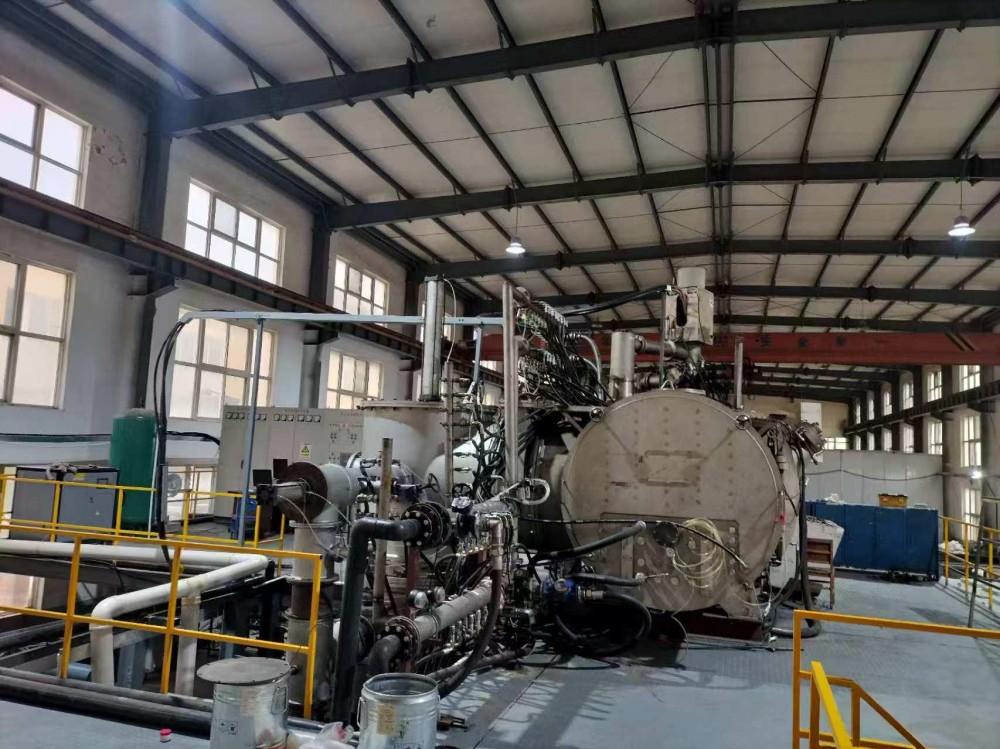
Yunjie Metals operates integrated research and development, production, and office facilities, with manufacturing capabilities covering multiple refractory and specialty metals. Its processing scope extends from material preparation and rolling to heat treatment, sheet-metal operations, and precision machining.
This integrated approach can simplify coordination across manufacturing stages. The suitability of a particular production arrangement, including capacity and lead time, should be confirmed according to the complexity and volume of each order.
7. Customization Should Be Supported by Clear Technical Communication
A successful custom metal project depends on the exchange of accurate information between the customer and manufacturer. Incomplete drawings, unclear material specifications, or changing requirements can create avoidable delays and inconsistencies.
Customers should provide the intended application, material grade, technical drawings, operating conditions, quantity requirements, and inspection expectations as early as possible. Manufacturers can then assess feasibility, identify missing information, and clarify the proposed production approach.
Yunjie Metals' portfolio of customized metal parts and specialty-metal products supports projects requiring different material forms and component configurations. Its combination of processing capabilities and internal technical resources offers a starting point for discussing application-specific manufacturing requirements.
For projects involving specialized materials or complex geometries, agreeing on specifications and acceptance criteria before production is particularly important.
Yunjie Metals Supports Custom Metal Manufacturing Requirements
Custom metal manufacturing brings together material science, engineering design, processing methods, and quality management. Careful planning across these areas helps industrial buyers evaluate production feasibility and establish clear expectations for finished components.
Founded in 1995, Yunjie Metals combines experience in refractory and specialty metals with integrated processing capabilities, internal research and development, and a diverse product portfolio. Its offerings include metal sheets, foils, rods, tubes, mesh, crucibles, stamped components, and customized metal products for demanding industrial applications.
By evaluating material suitability, dimensional requirements, manufacturing methods, quality controls, and technical communication at the beginning of a project, buyers can make more informed sourcing decisions and improve coordination throughout production.
For more information about Yunjie Metals' products, manufacturing capabilities, and customized metal solutions, visit the official website: https://www.yjmetals.com/
Baoji Yunjie Metal Products Co., Ltd.
Baoji Yunjie Metal Products Co., Ltd.
86 13801213978
houyong@yj-ql.com
Legal Disclaimer:
EIN Presswire provides this news content "as is" without warranty of any kind. We do not accept any responsibility or liability for the accuracy, content, images, videos, licenses, completeness, legality, or reliability of the information contained in this article. If you have any complaints or copyright issues related to this article, kindly contact the author above.
